Heide E. Presse b1958, German Artist


Artist Heide E. Presse


"I love antique clothes and old-fashioned gardens - they allow you to stop for a moment, and see the everyday moments in life that bring the greatest joy." she says.

Heide Presse was born in Heidelberg in Germany in 1958, and raised in Monroe, Louisiana.
Heide’s maternal grandfather was an architect and artist in Germany, and when she received the award at the age of 14 as the best artist in her class, it became clear that Heide, like her grandfather, would be engaged in painting. Heide soon entered the State University. Stephen F. Austin in Nakodoches, Texas, and graduating in 1980, received a bachelor of art degree in graphic design. Heide Presse currently lives with her husband and son in Tampa, Florida.

Heide loves to study 19th century history and applied art, and in order to give his work historical authenticity, Heide herself sews quilts and retro-style clothing accessories. The artist specifically collects antique antiques, which subsequently form the basis of her work, and her studio is home to chests, ceramics, baskets, textiles, lanterns and various items from the mid-19th century. The artist is impressed to depict on her canvases everyday moments of the life of ordinary people, using rich colors and bright light. Technique watercolor, oil. Heide believes that thanks to her paintings, she opens a window into the past for the audience.


63 Paintings By Volker Hermes | A Contemporary German Digital Artist | ArtLiveAndBeauty


Volker Hermes's Paintings


Volker Hermes Born in 1972 in Germany, he is a contemporary German digital artist. The original sitters from Hermes' continuing Hidden Portraits series are reimagined in whimsical digital image collages. The characters in the Hermes incarnations are overburdened with their own attire to the point of ridiculousness, as originally shown by Dutch artist Nicolas Piquenoy or French Baroque artist Georges de La Tour. Brocade masks hide one Elizabethan subject's eyes, rich robes stretch to the brow of another, and lace collars conceal the wearers' features. Volker Hermes is drawn to certain aspects of the original paintings, such as the ribbons that "set historical images in motion," as the artist puts it. "I'm currently working a lot with Rococo, which is getting a lot of attention at the moment after being considered kitsch for a long time." Throughout history, depictions of masculinity became a new topic. "I would like to draw attention again to outdated forms of masculinity that actually seemed outdated but are now becoming - unfortunately - attractive again to many men," he goes on to explain.


46 Paintings By Ludvik Glazer-Naudé | A Contemporary German Artist | ArtLiveAndBeauty


Ludvik Glazer-Naudé's Paintings


In the world of contemporary art, Ludvik Glazer-Naudé stands as a distinctive and versatile figure whose creative journey traverses various mediums, styles, and themes. His artistic repertoire spans painting, illustrations a rich tapestry of expressions that captivate audiences worldwide. Ludvik Glazer-Naudé born in 1961 He is a well-known Contemporary German illustrator and portrait painter and books Author. Ludvik Glazer-Naudé's artistic love began at a young age. A wide cultural background shaped his early years, cultivating a strong respect for the complexities of human existence and the environment. This foundation has a significant influence on his work, infusing it with a powerful combination of passion, culture, and social critique.  Ludvik Glazer-Naudé explores mixed media outside the traditional boundaries of painting and sculpture. Collages, assemblages, and multimedia works are an important aspect of his artistic expression, with each piece being a mosaic of various materials linked to portray rich themes. His mixed media pieces frequently act as a mirror to society challenges, highlighting ethnic variety, environmental concerns, and the complexities of human emotion.


Artist Wilhelm August Lebrecht Amberg ( 1822 - 1899 ) : A Master of Emotion and Realism in Art


Wilhelm August Lebrecht Amberg (1822-1899)


Wilhelm August Lebrecht Amberg (1822-1899) was a German painter known for his exceptional mastery of emotion and realism in art. Throughout his illustrious career, Amberg produced a diverse body of work that captured the hearts of many with its evocative portrayals of human emotions and scenes from everyday life. From tender domestic scenes to hauntingly emotive portraits, Amberg's art remains a testament to his ability to evoke a deep emotional response from viewers. This article will delve into the life, influences, and artistic contributions of this remarkable artist.


Born on March 6, 1822, in Dessau, Germany, Wilhelm Amberg displayed an early fascination with art. He received his initial art education at the Dessau Drawing School, and later, he continued his studies under the tutelage of the renowned German painter Wilhelm von Schadow at the Düsseldorf Art Academy. Under Schadow's guidance, Amberg honed his skills and developed a keen eye for detail and emotion, which would become hallmarks of his artistic style.


Artist Mike Dargas Master of Hyperrealism | ArtLiveAndBeauty


Paintings By Artist Mike Dargas


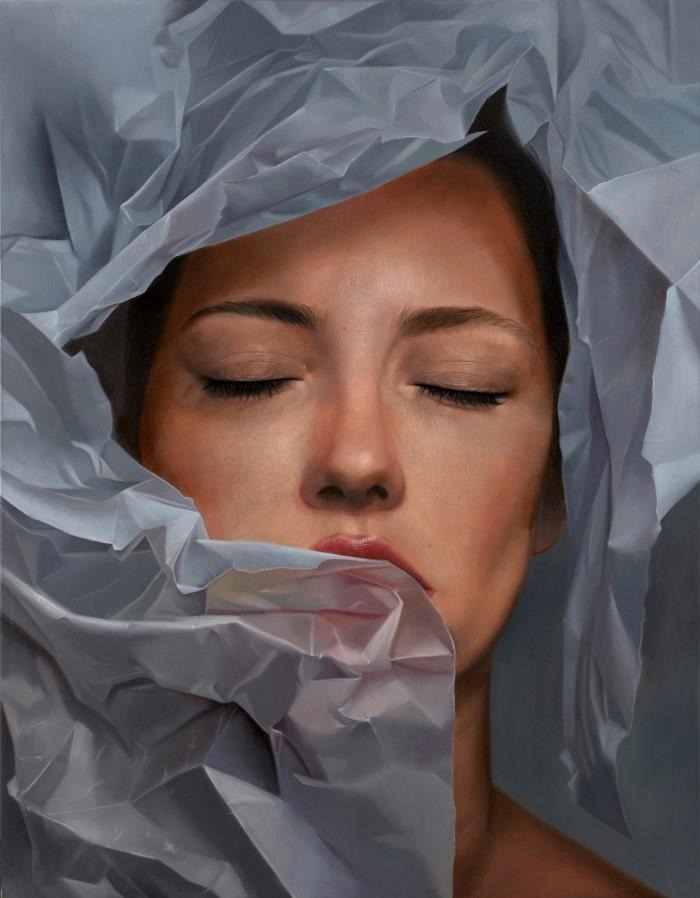
Mike Dargas, a German artist, was born in Cologne in 1983. Creates hyper-realistic portraits that immerse the spectator in a distinct mood with extended inspection. The oil paintings, inspired by the work of Salvador Dali and Caravaggio, are so near to perfection that they may be mistaken for pictures. Mike Dargas first became interested in the visual arts when he was 11 years old. Throughout his life, he experimented with a variety of painting styles and methods. Recently, he has been creating hyper-realistic portraits. He achieved significant heights in this painting method and never fails to astound lovers and connoisseurs of beauty with his abilities and capabilities.


Portrait of Augusta Strobl by Artist Joseph Karl Stieler (1781-1858)


 Portrait of Augusta Strobl


Augusta Strobl was to married Hilber (1807-1871). The portrait was painted in 1827 by Artist Joseph Karl Stieler (1781-1858). 


 Josef Karl Stieler was a German portrait painter.


 Stieler was born into the family of August Friedrich Stieler (1736-1789), a seal-carver at the Electoral Mint in Mainz. The Stieler family was known as a family of artists, among whom were painters of coats of arms and seals, engravers and painters.


 Stieler made his first steps in art under the guidance of his father, who died in 1789. In the following years, Stieler successfully educated himself in pastel and miniature. At the age of 17, Stieler undertook a trip to Würzburg. There, for almost two years, he was a student of the court painter Christoph Fesel, who in turn studied with Anton Raphael Mengs. Fesel Stieler studied oil painting. Then Stieler went to study at the Vienna Academy of Arts under Heinrich Friedrich Füger and made his debut as a portrait painter.


 In 1805-1806, Shtiler spent at the courts of Budapest and Warsaw, where he was simply inundated with orders. In 1807 he accepted an offer to move to Paris and work with François Gérard. In 1808 he returned to Germany and settled as an independent artist in Frankfurt am Main.


 King Maximilian I invited Stieler to his court in Munich, which became home for Stieler. He was appointed by the king to the court painters.

 For King Ludwig I, Stieler painted the famous Gallery of Beauties in Nymphenburg Palace.


 In 1824, Stieler co-founded the Munich Art Association. In 1833 he married the poet Josephine von Miller. They had three children

 Stieler spent the last years of his life in Tegernsee, where on the Leeberghang hill he built himself a summer house on a land donated in 1829 by the king.


 The king saw Augusta at the city ball. She, the daughter of the chief royal accountant, looked like a fairy in her puffy-sleeved muslin dress, with a pink-and-red scarf around her thin waist, and a bow of the same color in her brown hair.


 During the dance, King Ludwig said to the girl: “Dear Augusta, you just have to wish, and I will fulfill your every desire ...” The beauty answered without hesitation: “Your Majesty, promote the assistant forester Hilber. He is my fiancé."


 In any other country, under another king, this assistant forester would have been appointed the next day to guard the farthest corner in the farthest forest of the kingdom. But the king of Bavaria appointed the groom chief forester in Ergoldsbach. To this day, this is a nature protection zone, in a wonderful forest region in the Danube watershed.


Portrait of Augusta Strobl", by Artist Joseph Karl Stieler (1781-1858)
"Portrait of Augusta Strobl" , by Artist Joseph Karl Stieler (1781-1858)

Artist kathrin Longhurst | Hyperrealistic Theme of the Soviet Army | ArtLiveAndBeauty

kathrin Longhurst's Paintings 
LIGHTWEIGHT SOCIALISM

There is nothing more rare and beautiful than a woman who is shamelessly natural, who is comfortable in her perfect imperfection. For me, this is the true essence of beauty. (Steve Maraboli) Artist Kathrin Longhurst was born and raised in East Germany, where she began to study the basics of fine arts at the age of 14. After the unification of Germany, she lived in Scandinavia for 10 years and at the same time traveled to different countries of the world. In 2000, Katrin settled in Australia.

Many of kathrin Longhurst's artwork is a mixture of socialist realism and poster art. Her paintings are very mediocre, if we approach them from a purely artistic point of view, but at the same time they have a rather unexpected and curious look.

The whole surprise of kathrin Longhurst's paintings is that she managed to combine seemingly incompatible things in them - socialist realism and frivolity.

The artist's works are a kind of kitsch that can arouse conflicting feelings in people.

"For a long time I avoided my past, but recently I realized that I witnessed one of the most significant events of the 20th century. Remembering history, I turned to the pictures of my youth, combining them with beauty and sexuality. Mine paintings are a desire for beauty and luxury, which I was deprived of when I grew up in Eastern Europe. " kathrin said


"Marchesa Brigida Spinola Doria", 1606 - By Peter Paul Rubens (1577 - 1640)


"Marchesa Brigida Spinola Doria", 1606 - By Artist Peter Paul Rubens 


This is a wonderful portrait by Rubens of Brigida Spinola, a young (she was just 22 years old at the time of painting) Genoese from an aristocratic family. Her husband, Giacomo Massimiliano Doria, gave her this artwork as a wedding gift. It began as a full-length portrait with a view of the countryside. However, in the nineteenth century, the painting was severely cropped on the left, and the whole vista from the terrace vanished. Brigida is dressed in a silver satin and lace gown. Her look makes it clear that she is affluent and of position. The angle of her gaze and the perspective of the structures suggest that the picture was hung high—much higher than the spectator. This relatively huge (99 x 152.5 cm) artwork is now on display at the National Gallery of Art in Washington.


"Marchesa Brigida Spinola Doria", 1606 - By Peter Paul Rubens (1577 - 1640)
"Marchesa Brigida Spinola Doria", 1606 - By Peter Paul Rubens (1577 - 1640) 

42 Paintings By Artist Carl Timoleon von Neff 🇪🇪 | ArtLiveAndBeauty


Carl Timoleon von Neff's Paintings


Artist Carl Timoleon von Neff was a Famous 19th-century painter, exemplar of mature academicism, court artist to Nicholas I, gifted portraitist, creator of colossal temple paintings, and painter of works with historical subjects. As a portrait painter, Carl Timoleon von Neff made his mark on art history. His female portraits with heavenly features were very emotive. By highlighting the nobility and impeccable manners, the natural beauty of the features, and the porcelain whiteness of his models' skin, he expertly communicated the likeness of a painting. The artist paid close attention to the described details, clothing, and accessories. Carl Timoleon von Neff captured the beauty and wealth of the surroundings in ceremonial portraits.A chamber portrait by Carl Timoleon von Neff, a romantic artist who values the image of feminine elegance, holds a distinct position in his body of work. In this picture, he portrays images of his renowned "bathers," virgins of exquisite beauty. Such paintings were common in secular societies, graced the private areas of wealthy homes, and thrilled the eye with the piquancy of their subject matter. Despite the plot's seeming impersonality and the image's collectiveness, each heroine is actually hiding a distinct personality that the artist has disguised as a Nymph or another biblical figure.


Orpheus and Eurydice , By Artist Anselm Feuerbach (1829–1880)


Orpheus and Eurydice
by Anselm Feuerbach 
 1869


Orpheus, the singer, resided in Thrace in northern Greece. He had a tremendous ability for music, and his popularity spread across the Greek nation. Eurydice fell in love with him because of the music. She eventually married him. Their joy, however, was fleeting. She left her spouse and went into the wilderness. A snake curled around her leg and stung her. Eurydice screamed in agony and fright and collapsed on the grass. Orpheus rushed to his wife after hearing her pleading scream from afar. But when he saw the big black wings flashing through the trees, he knew it was Death carrying Eurydice to the underworld.


Orpheus and Eurydice , by Artist Anselm Feuerbach
source : https://sammlung.belvedere.at/objects/735/orpheus-und-eurydike


Orpheus was overcome with sadness. He abandoned everybody and spent days alone trekking through the woods, singing his heart out. And the force of these gloomy melodies was so strong that the trees abandoned their positions and surrounded the singer. Animals emerged from their burrows, birds fled their nests, and stones became closer. Everyone heard his longing for his lover, and Orpheus determined to visit the realm of the dead himself.


Orpheus sailed down the Styx, passing unknown people's spirits and souls. When he played his lyre, he melted Hades' heart. Orpheus was instructed by Hades that he might take Eurydice with him on one condition: she would accompany him out of the underworld's cave, but he should not look at her before she left the realm of the dead, or he would lose her forever.


Orpheus was overjoyed, thinking it would be a simple chore for someone as patient as himself; he thanked the gods and returned to the world. However, after failing to hear Eurydice's steps, he began to suspect that the gods had duped him. Eurydice was truly behind him, but like a shadow, she needed to return to the light in order to reclaim her complete femininity. Orpheus lost hope only a few feet from the exit and turned to see Eurydice behind him, but her shadow was hurled back into the realm of the dead, now forever.


Orpheus attempted to return to Hades, but a person cannot enter Hades twice while still alive. According to many versions of the tale, Orpheus started to sing a mournful song to his lyre, pleading for death so that he may eternally be with Eurydice. He is eventually slain by the animals that rip him apart. Another account has Zeus striking him with lightning because he was afraid Orpheus would divulge the mysteries of the underworld to the humans.

Johann Wilhelm Preyer ( 1803 - 1889 ) | A German Artist & Still life Master | ArtLiveAndBeauty


Johann Wilhelm Preyer's Still Life Paintings


John-Wilhelm Preyer ( Johann Wilhelm Preyer ; July 19, 1803, Mönchengladbach - February 20, 1889, Düsseldorf) is a German artist. Still life master. Johann Wilhelm Preyer Born into a family with a long history of artistic endeavours. Daughter - Emily Preyer, a John Wilhelm pupil, went on to become a still life painter. Gustav Preyer and his sister Louise Preyer were both artists. He attended the Düsseldorf Academy of Arts from 1822 until 1837. Johann Wilhelm Preyer travelled extensively around Europe, visiting the Netherlands in 1835, Munich in 1837, Venice and Milan in 1840, and Switzerland and Tyrol in 1843. The exceptional talents in painting technique, in which his canvases are near to nature, were the foundation of Johann-Wilhelm Preyer's tremendous success.


Artist Ludwig Gschossmann | 20th Century German Impressionist | ArtLiveAndBeauty


Artist-Ludwig-Gschossmann's-Paintings 


Ludwig Gschossmann is a German painter who influenced realism and impressionism. Ludwig Gschossmann's birth is shrouded in mystery. The artist was born in Strasbourg, according to most references. He was born in Munich in 1913, according to the "General vocabulary of artists of all periods and peoples." Despite the fact that there are no traces of his birth in Germany's Munich files. Gschossmann must have been born on several dates, including 1894, 1901, and 1914.


Artist Martin Eder (German artist)


Martin Eder is a German painter best known for his depictions of semi-nude women in pornographic poses. The nude subjects of his work are painted alongside planes of color and animal motifs. His unique style is influenced by a combination of softcore porn and nudes painted by Lucas Cranach the Elder, Sandro Botticelli, and Édouard Manet. “I think a nude is always sexual, as long as society doesn’t change completely,” he stated. “Nudes will always be around us, so I reinvented the nude for myself.” Born on August 31, 1968 in Augsburg, Germany, he studied fine art at the Academy of Fine Arts Nuremberg and at the Dresden Academy of Fine Arts, under the instruction of the artist Eberhard Bosslet. Eder currently lives and works in Berlin, Germany. Today, the artist’s works are in the collections of The Museum of Modern Art in New York, the Museum of Contemporary Art in Los Angeles, and the Seavest Collection of Contemporary American Realism in Purchase, NY, among others.


Artist Rainer Augur (German artist)


Artist Rainer Augur 


Objects and people are recorded and reproduced as accurately as possible. Bold colors and the play with light and shadow make scenes look particularly realistic. In order to draw attention to certain people in his works of art, they are presented in the central perspective and can be grasped and reached by the viewer in the immediate vicinity. As a result, the spark jumps quickly and you feel like you are in the scenery of your pictures. The role of the beholder dissolves and changes into that of a compassionate and experiencer.Rainer Augur's photo-realistic portraits show people in intimate, very personal moments.  Augur projects the emotions of his protagonists onto the viewer, relaxing an empathetic game of closeness and the fleetingness of the moment. His urban portraits also have this transitory character, which seem to "freeze" buildings, streets and people at the moment and give them drive and dynamism by means of sophisticated light and shadow technology despite the obvious standstill.


Hermann von Kaulbach (Deutsch, 1846 - 1909)


Hermann von Kaulbach was born on July 26th.


Hermann von Kaulbach (July 26, 1846, Munich - December 9, 1909) - German artist, son of Wilhelm von Kaulbach.


He studied painting under the leadership of Karl Piloti. His paintings are mostly technically brilliant and are particularly interesting due to the excellent statement of details


120 Masterpieces For Artist Beggi Boem


Artist Beggi Boem

 Artist Baggy Boem - lives and works in St. Petersburg. Beggi Boem is not a pseudonym, but the real name and surname. the artist’s dad was from Germany. And Beggi  herself was born in modern St. Petersburg. From childhood she was fond of painting, she graduated from art school, the Roerich Art School and the Stieglitz Academy (Faculty of Architecture). And for more than 20 years, Beggi Boem has been painting simply wonderful paintings. Beggi falling in love with Petersburg. I would like to offer you the most painting i love of her works. 


Artist Edward B. Gordon ( German artist)


Artist Edward B. Gordon 


He is a German-born painter based between Berlin and London. While London remains his spiritual home, Gordon spends most of his time in the German capital, inspired by its everyday life, where he observes and paints intimate moments of the day.Edward B. Gordon is a passionate portraitist of modern daily life who splits his time between London and Berlin. His large-format oil paintings seek to capture unique moments. They are discreet in nature, echoing our daily perceptions, and yet the scenes are full of poetry and density. Painted to be realistic, his images are like the photographs captured on city streets, yet they also contain an additional atmospheric quality. Light is the source of inspiration for Gordon. On his forays through the city he is inspired by normal, everyday moments: The back of a woman, an unusual beam of light. His images seem unusually close to us: Something from the present is transformed into the poetic. Colors’ and contrasts collide with one another, exploding the greyness of everyday life and reducing themselves to individual sensual elements. For many years an author of a blog presenting an oil painting every day, Gordon still mixes his colours’ himself. What others do with the camera and the simple operation of the shutter, Gordon does with the brush and the naked eye. Whether focusing on small, fleeting strokes, or impressive, full-screen depictions, his style is unmistakable.


Artist Karin Volker


Artist Karin Volker 


Born in Kierspe, Germany and academically trained at the University of Arts, Berlin, Karin has since established herself as an International best-selling artist with her stunning blend of energy, style and grace. Collectors frequently comment that her paintings recharge them, and they can share her energy and love of life through her work. Karin is inspired by moods, dance and music, usually working from mind rather than models; it is primarily colours and structures that lead her paintings. Karin’s work sells around the world and her originals are so sought after they are often sold before the brushwork is even finished.


Artist Gustav Bauerfeind (1848-1904)

Middle East through the eyes of 20th century European artists .

Oriental flavor at all times attracted artists, and European painters could not resist him. In front of the bewitching beauty of local markets, a colorful kaleidoscope of streets and the luxury of the decoration of the chambers of wealthy gentlemen.

Today we will go to an imprompt art gallery, which brings together bright, expressive canvases of the 20th century Orientalist artist , each of which is unique in its own way.

Artist Gustav Bauerfeind (1848-1904)

German painter, illustrator, architect. One of the most famous German oriental artists.


Artist Lioba Brückner (German artist)


Lioba Brückner received her diploma at the academy of arts in Düsseldorf, Germany 2012. She exhibits nationally and internationally. She lives and works in Oberhausen, Germany. His strong female protagonists coalesce with the enchanting flora and fauna of her darkly mysterious world, and beckon us into narratives overflowing with magical delights. The confluence of inspirations Brückner has derived from the lasting impressions of a youthful fascination with fairy tales is ever present, and bestows her imagery with intoxicating symbolic sentiments, that both exude warm flavours of familiarity and also nurture feelings that anything is possible. Brückner’s visual aesthetic has naturally evolved to a point that emphasises these suggestions of unlimited possibilities, and it is through her expressionistic mark making that we are encouraged to open up and put something of ourselves into her brushstrokes; embracing the beauty of our world and life’s ambiguities.